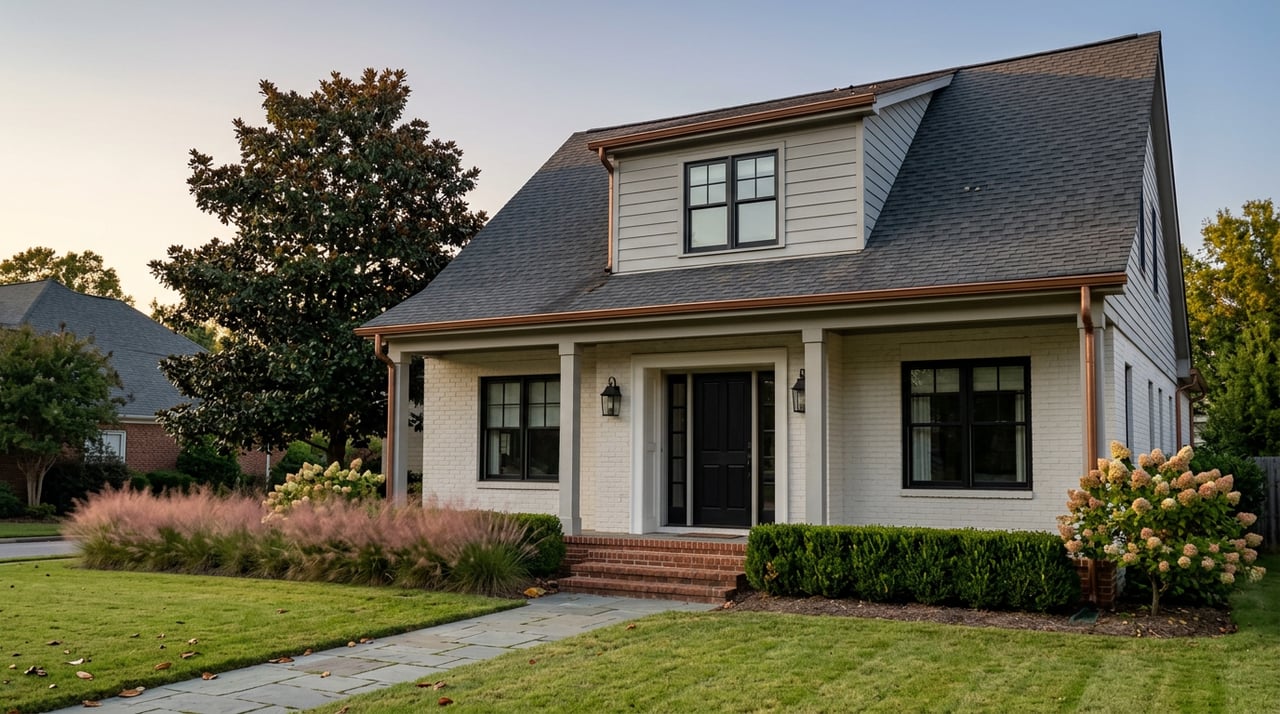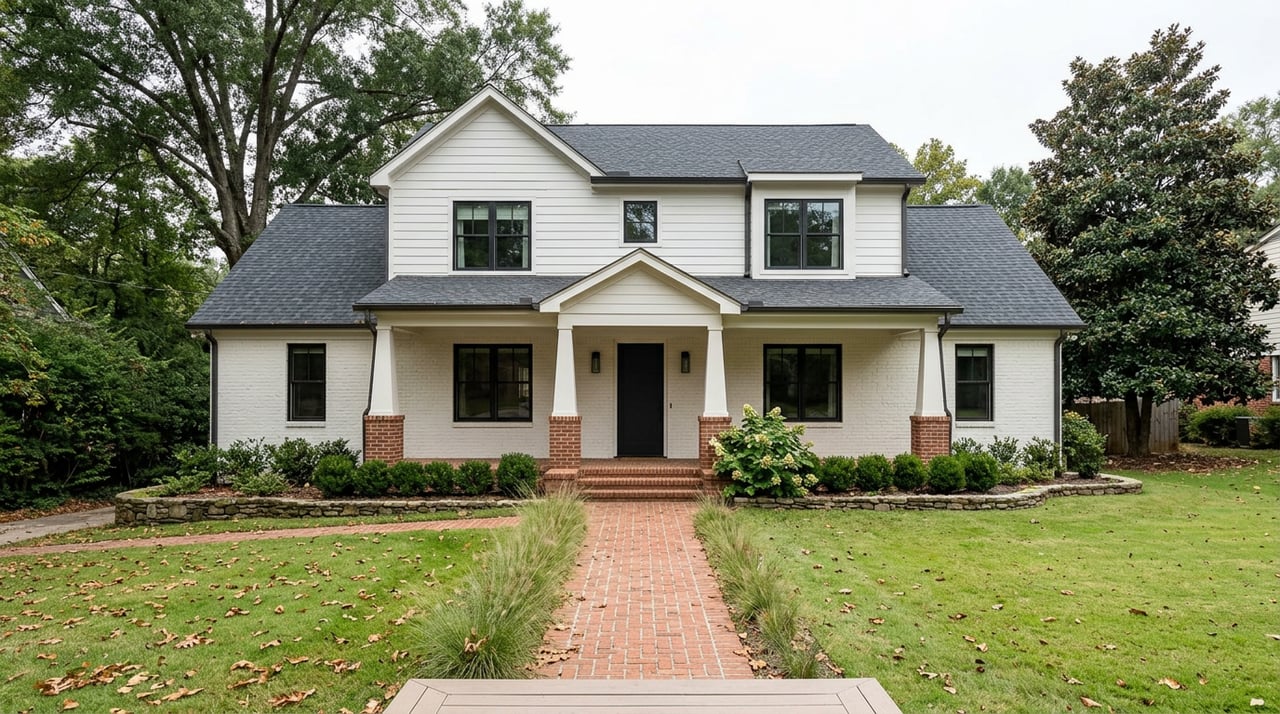
Drive out New Hill Olive Chapel Road or Old US Highway 1 on the western edge of Apex and you'll pass rural five and ten-acre lots sitting next to newer subdivisions with sidewalks and streetlights. From the road, it's hard to tell which parcels are inside Apex's town limits and which ones are still unincorporated Wake County. That distinction rarely shows up in a listing description, but it decides three things that matter more than square footage: your property tax rate, whether you're drilling a well or turning on a tap, and who gets to say yes or no the next time someone proposes building something next door.
For most of the past year, New Hill has been the place where that last question got tested in public, and the answer changed the rules for everyone buying there now.
The fight that put the line in daylight
In September 2025, a developer called Natelli Investments filed plans for a 190-acre "New Hill Digital Campus" on a farm property off Old US Highway 1, near Duke Energy's Shearon Harris Nuclear Plant. The site was zoned residential and sat in unincorporated Wake County, which meant the company needed Apex to annex it and rezone it to light industrial before construction could begin. The plan called for a 300-megawatt facility with dozens of backup generators, drawing up to a million gallons of water a day for cooling.
Neighbors organized fast. A group called the Protect Wake County Coalition, co-led by a resident named Michelle Hofner O'Connor, raised concerns about noise, air quality, and strain on the local grid and water system, and an online petition against the project drew more than 5,000 signatures. On March 5, 2026, Natelli withdrew its annexation and rezoning applications.
Within a week, Mayor Pro Tem Terry Mahaffey proposed a moratorium so the town could write real rules before the next proposal showed up. On April 14, 2026, ABC11 reported that the Apex Town Council voted unanimously to ban new data centers, data processing facilities, and cryptocurrency mining operations for twelve months. The pause runs through April 27, 2027, as IndyWeek reported. Mayor Jacques Gilbert put it plainly at the meeting, as GovTech reported.
"I'm not interested in a data center in Apex."
That single sentence tells you something useful if you're buying nearby. The town isn't just pausing one project. It's rewriting the zoning playbook for that whole corridor, and the Environmental Affairs Board is doing it in public, on a published schedule that started this month. September 2026 is dedicated to reviewing energy consumption and generation impacts, October moves to water, November to public health, and January 2027 to noise, before a full ordinance draft goes through review in February and March of next year. If you close on a property near that corridor before the new rules exist, you're buying into a zoning conversation that hasn't finished.
The freeze nobody puts in the listing
Here's the part that makes New Hill different from almost anywhere else in Wake County right now. The Natelli site sat outside Apex's extraterritorial jurisdiction, or ETJ, the buffer zone where a town's zoning and building rules apply even though the land isn't yet inside the town limits. Under North Carolina law, land inside a town's ETJ has to follow that town's development rules, but it doesn't get town water, sewer, trash pickup, or fire response, and it doesn't pay town property tax, until it's formally annexed. Raleigh's own planning department lays out the mechanics this way on its site, and the same framework governs how Apex's ETJ works.
In its 2025 session, the North Carolina General Assembly passed a law, Senate Law 30, that froze ETJ expansion for every municipality in Wake County until December 31, 2028. Practically, that means land just outside Apex's current line can't be pulled into the town's zoning umbrella for at least two more years, no matter how close it sits to existing subdivisions or how fast the surrounding area develops.
Meanwhile, land that's already inside the pipeline keeps moving. An 83.5-acre tract off New Hill Olive Chapel Road, tied to a project called the Welch Homestead, has been working through annexation and rezoning into a planned unit development, with 10 percent of units set aside for households earning up to 120 percent of the area median income, according to Holly Springs Update. Wake County Public Schools has flagged that middle schools serving the area are already approaching capacity, which means new development there could bring bus route or school assignment changes down the line. Until that annexation clears, the property sits under Wake County's Residential-40 Watershed zoning, the same designation covering the acreage lots next door.
So you end up with a patchwork that will hold steady for years: parcels already inside Apex, parcels moving through annexation like Welch Homestead, and everything else locked out of that process until 2028 by state law. Two houses on the same stretch of road can answer to genuinely different governments, and which one yours answers to isn't going to change soon.
What the line actually costs you
The tax and utility numbers make the split concrete. New Hill (ZIP code 27562) carries the highest median home price in Wake County, at $658,639, and a median annual property tax bill of $5,466, against a county-wide median bill of $3,792. That's not because New Hill homes are uniformly more expensive to build. It's because a meaningful share of the area is still large, unincorporated acreage, and fewer, pricier parcels pull the median up. Comparing a New Hill listing to a standard Cary or Apex subdivision comp on price alone skips over the fact that you may be comparing a five-acre well-and-septic property to a quarter-acre lot on public utilities.
That utility split has its own price tag. The dividing line for water and sewer service is the municipal boundary itself: inside it, you're typically on public water and sewer; outside it, you're usually looking at a private well and septic system. As of early 2026, septic system installation runs from roughly $10,000 for a conventional gravity system up to $30,000 or more for an advanced treatment system on tighter soil. Where public sewer is available, tap fees typically run $1,000 to $5,000 or more, on top of a monthly water bill that averages $30 to $80 across the Triangle. Some subdivisions just outside a town's limits do get municipal service through negotiated extension agreements, but that has to be confirmed parcel by parcel with the utility provider. It's never safe to assume.
What to actually check before you write an offer
If you're serious about a property in New Hill, treat the town-line question as its own line item in due diligence, not an afterthought.
- Confirm annexation status directly with the Town of Apex, not from the listing. A property can be inside Apex's limits, inside its ETJ, or fully in unincorporated Wake County, and each status carries different tax rates and service obligations.
- Ask whether water and sewer are available at the specific parcel, and get that answer from the utility provider, not a general sense that "the area has city water."
- If the property is on well and septic, request the septic permit, system type, and any maintenance records, and budget for a professional evaluation before closing.
- Ask your agent or the town planning office whether the parcel or its immediate neighbors have pending annexation, rezoning, or PUD applications. The Welch Homestead case shows how much can be in motion at once even in what looks like a quiet corner of the county.
- If proximity to the Shearon Harris corridor is a factor for you, note that Apex's data center moratorium runs through April 27, 2027, and the town's Environmental Affairs Board is actively drafting the permanent rules this fall and winter. Ask what stage that process is in before you assume the current quiet will hold.
None of this shows up in a walkthrough. It shows up in a records request, a phone call to the town, and a conversation with someone who's watched this corridor long enough to know which questions actually matter.
A few questions worth asking before you close
Does being in unincorporated Wake County mean lower property taxes? Not necessarily. You'll skip the town's tax rate, but you'll also skip town services, and New Hill's overall tax bills already run higher than the county median because of the area's larger, higher-value lots.
Will the data center moratorium affect resale value? It's too early to say with certainty, but the moratorium and the ETJ freeze both signal that Apex intends to control what gets built near New Hill more tightly than it has in the past, which is generally a stabilizing factor for nearby residential land use.
Can I still get municipal utilities extended to a property outside Apex's limits? Sometimes, through a negotiated extension agreement tied to a specific development, but it has to be confirmed with the utility provider for that exact parcel. Don't assume it based on nearby subdivisions.
New Hill rewards buyers who ask the boring questions first. If you're looking at a property out there and want someone who's been tracking exactly where these lines sit, reach out to Hendren Realty Group and request a free home consultation and valuation before you write the offer, not after.
This article is general information, not legal, tax or financial advice. Consult a qualified professional about your situation.