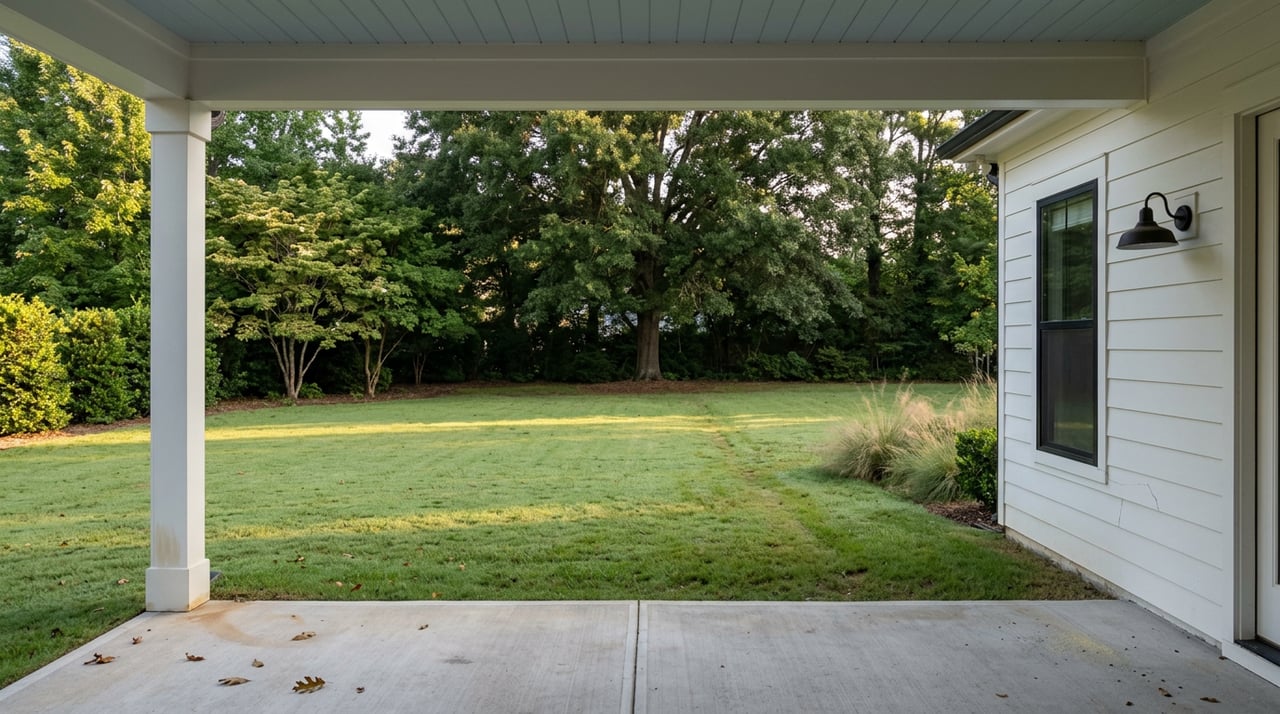
You're standing in the backyard of a three-bedroom ranch somewhere off Judd Parkway, half a mile past the last stretch of town water line, and the listing sheet says the septic system was pumped two years ago. You nod. You assume, the way most buyers assume, that somewhere in the closing process a government inspector checks that box the same way a building inspector signs off on the electrical panel.
Nobody does. Not in Wake County.
The county's own Onsite Water Protection program is explicit about this: Wake County does not conduct point-of-sale septic inspections as part of a real estate transaction. If you want the tank, the drain field, and the distribution box checked before you sign anything, you have to arrange it yourself, through a privately certified inspector, on your own timeline, at your own cost. There is no government backstop quietly working in the background the way there is with a home's electrical or structural inspection through the town's building department.
The gap most buyers never think to ask about
This matters more in Fuquay-Varina than in a lot of the Triangle, because the town is a genuine mix of two very different infrastructure worlds. Inside the older grid, particularly the historic homes near downtown Fuquay Springs, and in a lot of the newer subdivisions further out along Judd Parkway and in the Varina District, private well and septic systems are still the norm rather than the exception. South Lakes and other master-planned communities blend both, some sections on town water and sewer, others still running on the same private systems that have served rural Wake County for decades.
If your home sits inside town limits on municipal water and sewer, the plumbing question at closing is mostly about age and condition, not ownership structure. If it sits on a well and septic system, you are effectively buying a small private utility along with the house, and finding out what kind of shape it's in matters.
Finding out what you actually own
Here's where it gets more complicated for older homes. Wake County keeps wastewater and well permits on file, searchable through the county's permit portal or iMaps, but for structures built decades ago, that record can be thin or missing entirely. The county's own guidance acknowledges this directly: if a permit hasn't been scanned into the system, you can request a copy, but if the structure is old, the information on file may be limited, and the county recommends contacting a private home inspector, installer, or wastewater consultant to help locate and evaluate the system in person.
Translation: on an older septic property, "what system is this and how old is it" is sometimes a question nobody, not the seller, not the county, not the listing agent, can answer with certainty from paperwork alone. Somebody has to go dig, literally, to find out.
The same logic applies to wells. Every new private drinking water well in Wake County has to be permitted, inspected, and tested by the county's Environmental Health division before it goes into service, and well repairs or abandonments require their own permit and inspection. That's a reasonably clean paper trail for anything built in the last couple of decades. Anything older is a different story.
The paperwork that follows you home
The due diligence period isn't the only place this shows up. If you're a move-up buyer planning to add a pool, a garage, a deck, or even a shed to a septic property after closing, Wake County's Accessory Structure Permitting process kicks in before you can build.
The point of the review is straightforward: make sure whatever you're adding doesn't sit on top of the septic system, the repair area reserved for a future drain field, or the well. In practice, it means:
- You submit a site plan showing the septic system, repair area, well, and the proposed addition
- The county schedules a site visit, which carries a $200 fee
- Wake County explains that 811 marks public utility lines, not private water or sewer runs between the meter and the house
- If the review finds the addition would significantly impact the system, a new wastewater permit may be required, with additional fees, before construction can proceed
None of this is disqualifying. It's just a step that a buyer moving into a townhome on municipal utilities never has to think about, and a step that a lot of septic-property buyers don't learn exists until they're already trying to pull a permit for the deck they planned when they made the offer.
Two homes, two very different closings
| Home on well and septic | Home on town water and sewer | |
|---|---|---|
| Point-of-sale inspection | Buyer arranges privately; county does not perform one | Utility connection verified through standard closing process |
| System history | May require a private consultant if permit records are thin | Typically documented through town utility billing history |
| Future additions | Accessory Structure Permitting review required, $200 site visit fee | Standard building permit process only |
| Repair responsibility | Town infrastructure investment funds shared system capacity |
The asymmetry is the whole point. It's not that one type of home is worse. It's that one carries a due diligence checklist the other doesn't, and if you're comparing a listing off Judd Parkway to one three miles away inside town limits, you're not comparing apples to apples on inspection effort, even if the square footage and price look identical on paper.
Why the timing actually works in your favor
Here's the part that changes the calculus for anyone shopping this segment right now. Fuquay-Varina's market has cooled measurably. In July 2026, the median list price sat at $461,000, down from $475,000 the year before. Homes are taking about 90 days to sell on average, compared to 58 days a year earlier, nearly a month longer per listing. At the same time, more homes actually changed hands, 1,000 in July 2026 versus 919 the year before, meaning the market hasn't stalled, it's just moving at a slower, more negotiated pace per transaction.
That combination, more inventory and less urgency, is exactly the environment where a septic-specific ask lands well with a seller. A buyer who requests a fresh point-of-sale septic inspection as part of due diligence, or asks for a repair credit tied to what that inspection finds, isn't making an unreasonable demand in a market where homes are sitting for three months. A year ago, with homes moving in under two months, that same request might have cost you the house. Right now, it's a normal contingency, and sellers on well-and-septic properties who know their system's history clean have every incentive to say yes and move on.
What to actually put in your offer
If you're writing an offer on a well-and-septic home in Fuquay-Varina, a few things belong in your due diligence checklist from the start:
- A septic inspection performed by a certified inspector, arranged and paid for on your own schedule, not assumed to be part of the standard closing process
- A request for whatever permit history the seller or county has on file, with the understanding that older systems may have thin records
- If you're planning any addition, a conversation with the county's Onsite Water Protection program before you finalize floor plans, not after
- If the inspection turns up needed repairs, a repair credit negotiated as part of the current offer rather than assumed as a future maintenance item
A few questions worth asking before you write an offer
Does Wake County ever inspect a septic system as part of a sale? No. The county's Onsite Water Protection program does not conduct point-of-sale inspections. That responsibility sits with the buyer, who hires a privately certified inspector.
What if the home I'm considering doesn't have a septic permit on file? It's more common than you'd think on older properties. The county recommends working with a private inspector, installer, or wastewater consultant to locate and evaluate the system directly, since paper records for decades-old systems are sometimes incomplete.
Can I add a pool or deck to a septic property whenever I want after closing? Not without a review first. Wake County's Accessory Structure Permitting process checks that any addition, including decks, pools, garages, and sheds, won't impact the septic system, its repair area, or the well. Plan that conversation before you finalize renovation plans, not after the framing goes up.
Buying on a well and septic system in Fuquay-Varina isn't a reason to hesitate. It's a reason to ask different questions than you would on a home with town water and sewer, and to ask them earlier than most buyers think to. If you're weighing a property like this and want a straight read on what its specific system history looks like before you write an offer, Hendren Realty Group can walk the due diligence timeline with you and connect you with the right local inspector. Request a free home consultation and valuation, and let's find out exactly what you'd be buying before you're locked into finding out the hard way.
This article is general information, not legal, tax or financial advice. Consult a qualified professional about your situation.